How Vast is Space
How Vast is Space?
PART-1
The True Scale of the Cosmos—and Why Hard Science Fiction Must Respect It
Hard science fiction readers demand something different.
We don’t want hyperspace hand-waving or galaxies treated like neighboring cities. We want orbital mechanics that work. We want delta-v budgets that make sense. We want relativistic consequences that hurt.
And above all—we want scale. Because scale is the defining feature of the universe. Space is not vast in a poetic sense. It is vast in a measurable, brutal, mathematically unforgiving sense. If you’re writing hard science fiction—or reading it to feel the weight of reality—you need to internalize just how enormous the cosmos truly is.
Let’s quantify it.
The First Illusion: Earth Feels Big
Earth’s diameter is about 12,742 kilometers. To a human, that feels planetary—literally.
But the Moon orbits at an average distance of 384,400 kilometers. You could line up about 30 Earths between them.
Light, traveling at 300,000 km per second, takes 1.3 seconds to make that journey. Already we’ve shifted into physics that doesn’t behave like daily life. Communication delays. Orbital transfer windows. Escape velocity.
And this is still just the warm-up.
The Solar System: Where Distance Becomes a Tyrant
The Sun is 1.39 million kilometers across. You could fit roughly 1.3 million Earths inside it. Light takes:
* 8 minutes to travel from the Sun to Earth
* Over 5 hours to reach Pluto
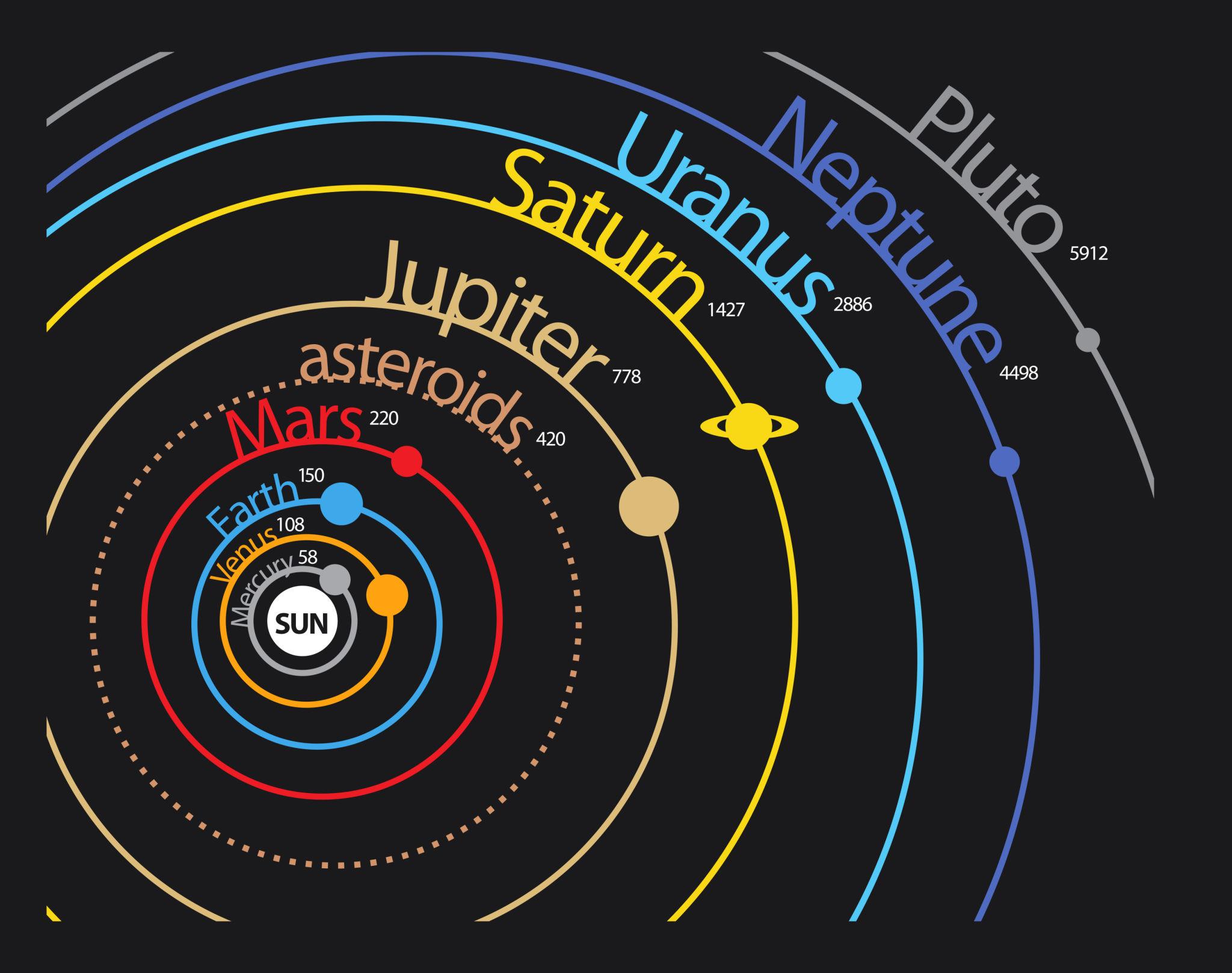
Now consider spacecraft speeds. Voyager 1 travels at roughly 17 km per second. At that velocity, reaching Pluto takes years. Reaching the Sun’s gravitational boundary—the heliopause—took decades. Inside a single star system, we are already dealing with:
Multi-hour communication lag
Multi-year mission timelines
Complex gravitational mechanics
For hard science fiction, this matters profoundly.
If your story spans the solar system, real-time control is impossible. Mars and Earth cannot converse casually. Any political structure must account for delay. Every outpost becomes semi-autonomous. The physics enforces it.
The Nearest Star: Where Human Intuition Fails Completely
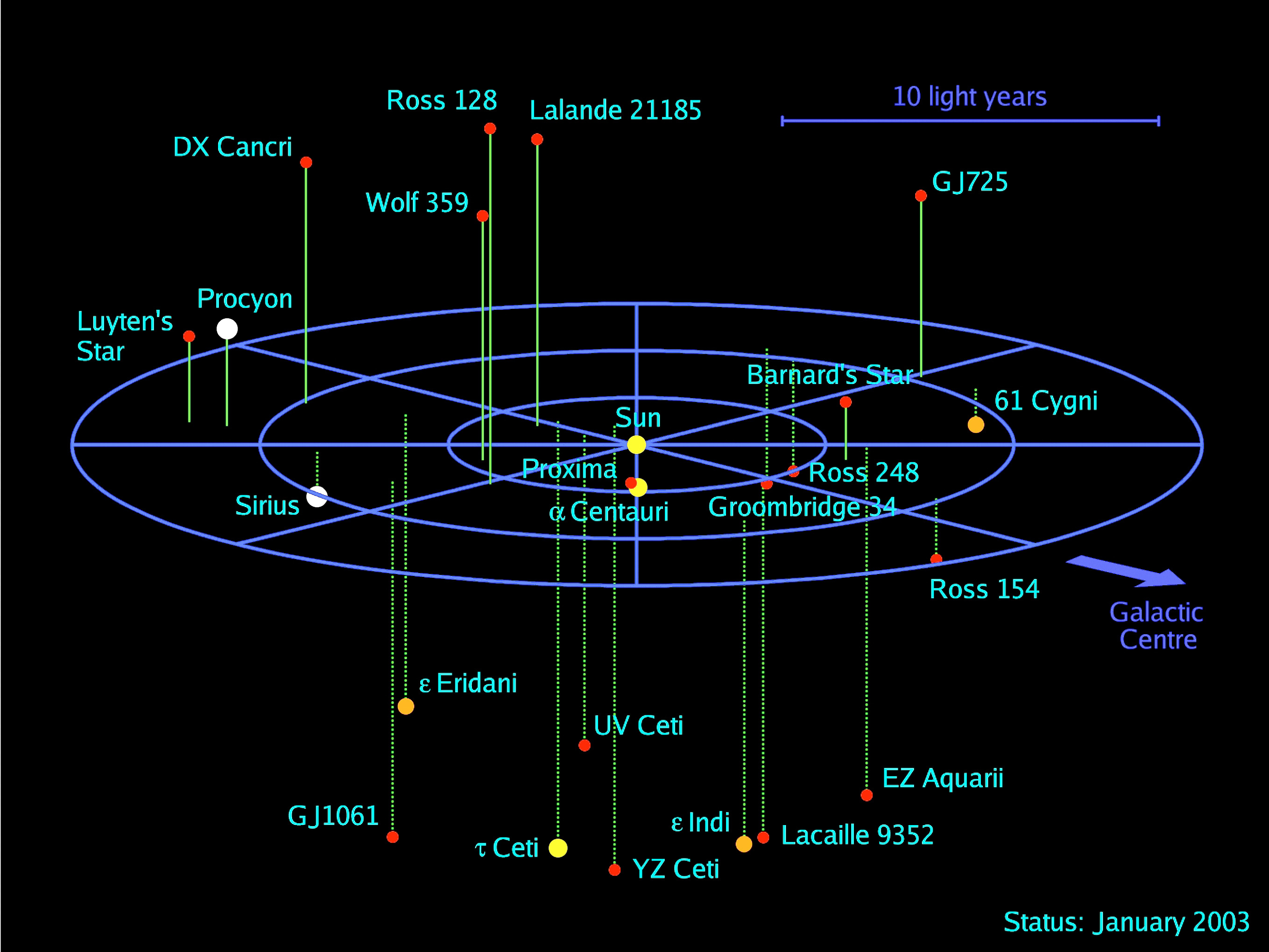
The nearest star to the Sun is Proxima Centauri. Its distance: 4.24 light-years. That is roughly 40 trillion kilometers. At Voyager’s speed, it would take about 75,000 years to arrive. Let’s assume a more ambitious scenario: 10% the speed of light (0.1c). That is far beyond our current engineering capabilities but still within theoretical reach using nuclear pulse propulsion or advanced fusion concepts. Even then, the journey takes over 40 years.
One way.
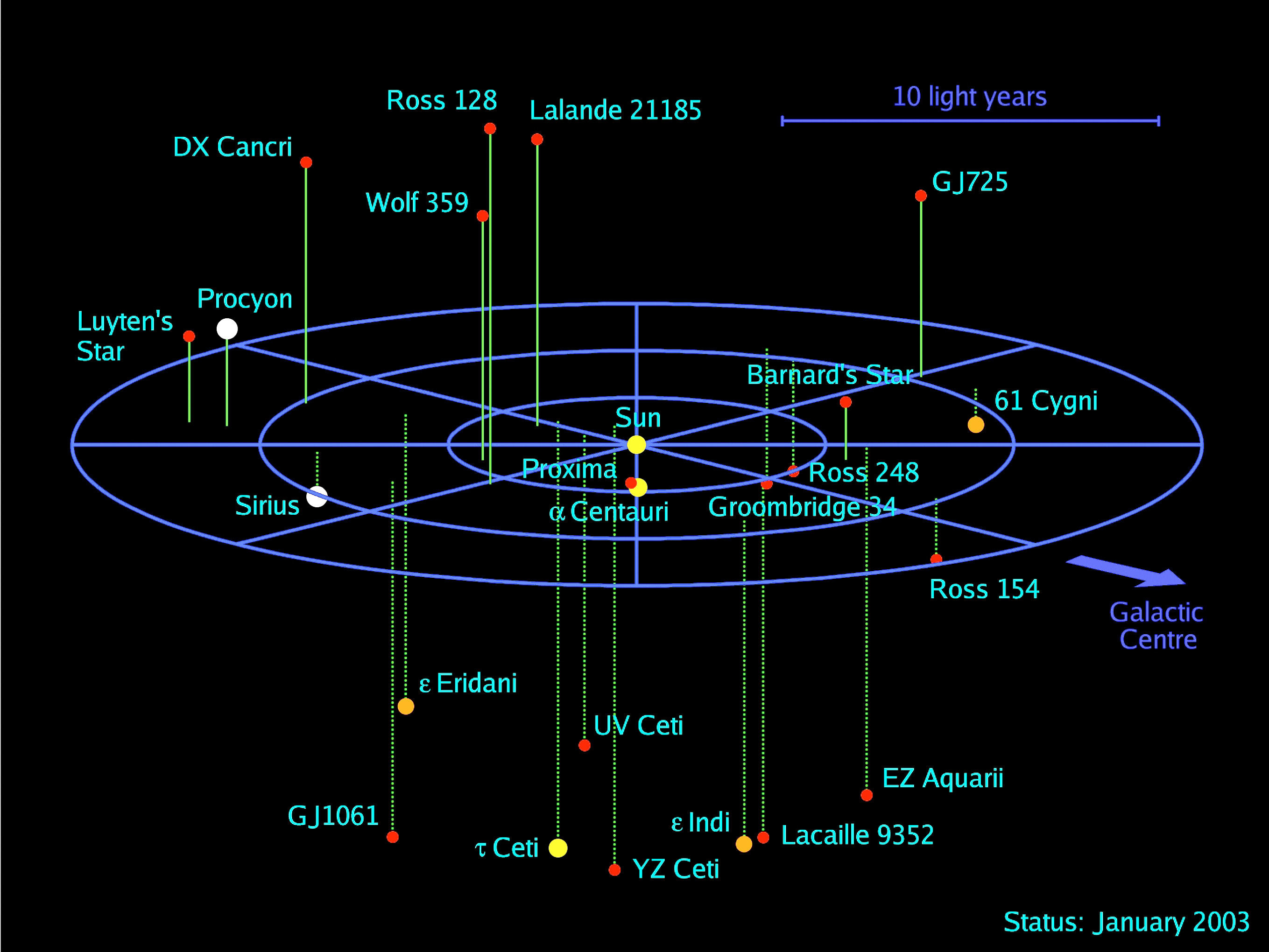
This is where hard science fiction separates itself from space fantasy. Interstellar travel is not a backdrop—it is the central engineering, biological, and sociological challenge. You must choose:
Generation ships, where multiple human lifetimes pass during transit
Cryogenic suspension, which introduces medical and reliability risks
Relativistic travel, which creates time dilation effects
Digital consciousness or AI probes, which raises philosophical consequences
There is no casual interstellar commute. Distance forbids it.
The Milky Way: A City 100,000 Light-Years Across
Our galaxy contains somewhere between 100 and 400 billion stars. Its diameter is approximately 100,000 light-years. Even at light speed—an absolute cosmic speed limit—you would need 100,000 years to cross it.
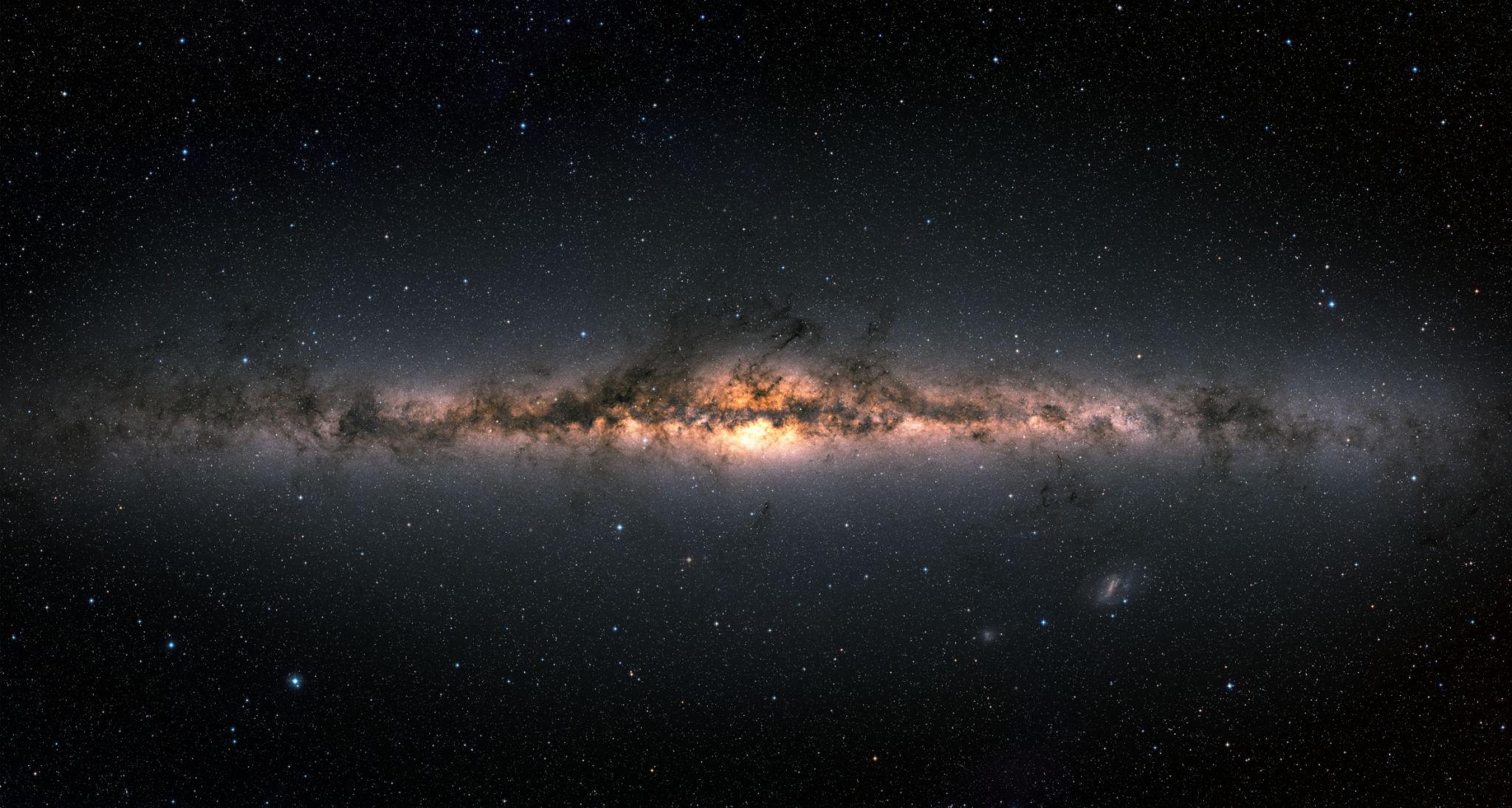
If you are writing about galactic civilizations in hard SF, you must confront this reality:
Empires cannot be centrally governed without faster-than-light communication.
Cultural divergence between colonies is inevitable.
War, trade, diplomacy—all operate on timescales of centuries or millennia.
Without FTL (and hard SF usually resists it), galactic society resembles an archipelago of isolated systems, slow, patient, and often silent.
The Observable Universe: Where Numbers Lose Meaning
The observable universe spans about 93 billion light-years in diameter. It contains an estimated two trillion galaxies.
And because space itself is expanding, there are galaxies whose light we can see—but whose present positions we can never reach.
Not with fusion drives.
Not with antimatter.
Not with relativistic sails.
Cosmology imposes a hard boundary. This is not a technological limitation. It is geometric.
PART-2
What Vastness Does to Storytelling
Hard science fiction thrives when it embraces constraint rather than evades it. Here’s what cosmic scale forces into your narrative:
1. Energy Is Everything
Accelerating mass to significant fractions of light speed requires staggering energy. The rocket equation is merciless.
2.Time Becomes a Character
Relativity means travelers age more slowly than those left behind. A 0.9c voyage to a distant star compresses subjective time but expands separation.
3.Isolation Shapes Civilization
Colonies evolve independently. Language shifts. Politics diverges. Identity fragments.
4.Communication Is Not Instant
A message to a colony 20 light-years away takes 20 years to arrive—and 20 years for a reply. Space doesn’t just separate people physically. It separates them temporally.
Deep Dive: Relativistic Travel
If a ship travels at 0.9c (90% the speed of light), time dilation becomes significant. The Lorentz factor at 0.9c is about 2.29.
This means:
10 years pass on Earth.
Only about 4.4 years pass for those aboard the ship.
Push to 0.99c and the factor increases dramatically. At these velocities, travelers can cross dozens of light-years in what feels like years—while centuries pass at home. Hard SF uses this not as a trick, but as a consequence.
Characters return to futures that have forgotten them. Political structures shift during transit. Personal sacrifice becomes cosmological.
Relativity is not decoration. It is narrative gravity.
Deep Dive: Generation Ships
Generation ships may be more plausible than relativistic craft. If propulsion remains limited to a few percent of light speed, journeys between stars last centuries. Such vessels become:
Closed ecological systems
Multi-generational social experiments
Fragile micro-civilizations
Small errors compound over decades. Cultural myths form about the mission’s origin. Political power structures mutate. The tyranny of distance transforms into the tyranny of sustainability. The question shifts from “Can we arrive?” to “Can we remain coherent long enough to try?”
Why Readers of Hard SF Care
You read hard science fiction because it respects the universe. You want:
Physics that does not flinch
Engineering that feels possible
Civilizations shaped by constraints
When a story acknowledges that crossing 10 light-years is monumental, it gains credibility. When it shrinks the galaxy into a manageable neighborhood, it loses weight. The vastness is not an obstacle to storytelling. It is the source of its power.
The Psychological Vastness
There is one more dimension to consider. Humans evolved to comprehend walking distances and seasonal cycles. Our intuition caps out around days and miles. The universe operates in:
Light-years
Stellar lifetimes
Galactic rotations lasting hundreds of millions of years
The Sun takes roughly 225 million years to orbit the center of the Milky Way. When dinosaurs walked Earth, the Sun was in a different region of the galaxy. That is not poetic exaggeration. It is orbital mechanics. Hard science fiction invites readers to expand their cognitive scale—to think in centuries, millennia, and cosmic epochs. That expansion is part of the genre’s intellectual pleasure.
Why This Matters for Our Fiction
If we are serious about writing scientifically grounded stories, we must treat space as it is:
Vast beyond intuition
Hostile not by intent, but by indifference
Structured by physics, not narrative convenience
In my own work, propulsion systems obey energy budgets. Colonies fragment culturally. Time dilation carries emotional cost. Interstellar politics move at glacial speed. Not because it is dramatic—but because it is true.
And truth, in hard science fiction, is the ultimate authority.
The Final Perspective
Space is not vast because it contains countless stars. It is vast because of what separates them. Between stars lies almost nothing. Between galaxies, even less. That emptiness is the stage upon which civilizations attempt the impossible. Respect the scale, and your fiction gains gravity. Ignore it, and your universe shrinks to a set piece.
If you are drawn to stories that treat the cosmos with this level of rigor—where propulsion is calculated, where light-speed is a barrier rather than a suggestion, and where the consequences of distance reshape humanity—then you are exactly the reader I write for.
The universe is enormous.
Our ambition must be equally so.
And hard science fiction is where the two collide.

